

Hello and welcome to Knowledgeonet - A Place to learn new and knowledgable things. So here is our next part of chapter life process - Respiration..
1.Why do we respire?
All the living organisms are made up of small microscopic units called the cells.
These cells have different functions to perform in these organisms such as digestion, respiration, transportation and excretion.
The cells can perform this function only if they get the energy to do so.
Hence, all living organisms need food which gives them the required energy.
The energy present in the food gets released when the organisms respire or breathe.
2.How food helps us in gaining energy?
As we breathe, we take in the air that contains oxygen in it and breathe out air which contains carbon dioxide. This oxygen when transported to our cells helps in breaking down the food and we get energy.
3.What is cellular respiration?
Cellular respiration can be defined as the process in which the food that we eat is broken down inside the cells which results in the release of energy. All the cells in living organisms undergo cellular respiration.
The cellular respiration takes place in a cell organelle called mitochondria.
The oxygen that an organism breathes in reacts with the carbohydrates (glucose) present in the food and results in the release of carbon dioxide, water and energy.

Figure 1 Cellular Respiration
4.Types of respiration
| Aerobic Respiration | Anaerobic Respiration |
| 1. This kind of respiration takes place in the presence of oxygen. | 1. This type of respiration happens in the cells in the absence of oxygen. |
| 2. It leads to release of a high amount of energy in living organisms. | 2. It results in a low amount of energy. |
| 3. Human beings and many other animals undergo aerobic respiration. | 3. Yeast and sometimes human beings undergo anaerobic respiration. |
| 4. Carbon dioxide and water are also released in aerobic respiration. | 4. Animal muscle cells release lactic acid and Yeasts release ethanol and carbon dioxide in anaerobic respiration. |

Figure 2 Aerobic Respiration in Animals
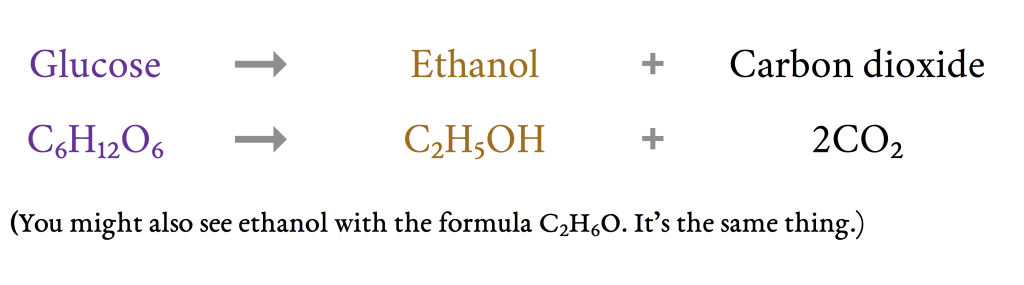
Figure 3 Anaerobic Respiration in Yeast
Anaerobes:
Organisms that can exist in the absence of air are called anaerobes.
They undergo anaerobic respiration hence can get energy even without oxygen.
For example, Yeasts. These are unicellular organisms that exist in the absence of oxygen as well.
As a byproduct, they release ethanol and carbon dioxide. That is why they are used to make wine and beer. This is called as alcohol fermentation.
5.Anaerobic respiration in human beings
Sometimes muscles of human beings can respire without oxygen.
This generally happens when we undergo a heavy exercise such as running, weightlifting, cycling or walking for a longer duration.
In such situations, the muscles require more energy and the supply of oxygen is not enough.
Hence anaerobic respiration takes place in the muscles.
As a result of muscles also produce lactic acid along with energy.
This lactic acid accumulates in the muscles and causes cramps.
That is why we often feel cramps while we do heavy exercises.
In order to get relief from cramps, we can take a hot water bath or massage our muscles.
This is so because hot water bath or massage improves the blood circulation in the muscles.
As a result, the oxygen reaches the cells easily which breaks on the lactic acid into carbon dioxide and water.

Figure 4 Anaerobic Respiration in Muscles Releases Lactic Acid
6.Breathing:
Breathing can be defined as a process in which organisms, with the help of their respiratory organs, take in the oxygen-rich air present in the surroundings and release out air that contains high amount of carbon dioxide in it. Breathing occurs continuously in the organisms.
Inhalation is the process of taking the air that contains oxygen inside the body.
Exhalation is a process of releasing out air that contains carbon dioxide out of the body. Inhalation and exhalation take place alternatively in the breathing process.
Breathing rate can be defined as the number of times a person breathes in a minute.
A breath can be defined as an inhalation followed by an exhalation.
The breathing rate is not always constant in human beings. We generally breathe faster when our body needs more energy for example while exercising.
This is so because the body needs more oxygen that can break down the food and produce more energy.
An average adult human being breeds 15 to 18 times in a minute. While exercising, this rate can change up to 25 times a minute.
So that's all about this part if you want more about it please mention in comment also visit our Youtube Channel , and please Subscribe and support it.
link - https://www.youtube.com/channel/UCnCsCpXM7yXwR8CqgOh1qVg

This is dummy text. It is not meant to be read. Accordingly, it is difficult to figure out when to end it. But then, this is dummy text. It is not meant to be read. Period.
ConversionConversion EmoticonEmoticon